(888) 519-2871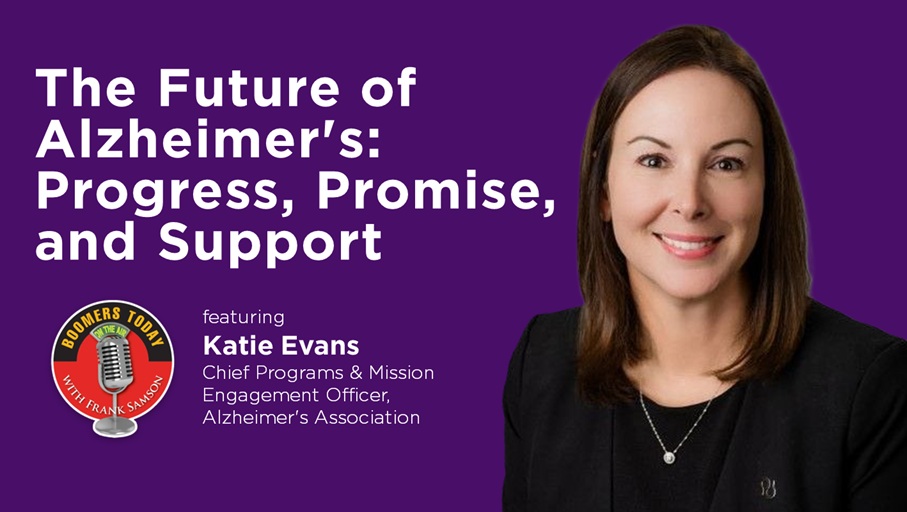
Insights from Alzheimer’s Association Chief Programs and Mission Engagement Officer Katie Evans on the Boomers Today Podcast.
As part of National Alzheimer’s & Brain Awareness Month, conversations about memory loss, dementia, and brain health have never been more important. While many families continue to face the challenges of Alzheimer’s disease, recent advances in research, diagnosis, treatment, and caregiver support are creating new reasons for hope.
During a special June 8, 2026 episode of the Boomers Today podcast, host Frank Samson, Founder and CEO of Senior Care Authority, sat down with Katie Evans, Chief Programs and Mission Engagement Officer for the Alzheimer’s Association, to discuss the rapidly evolving landscape of Alzheimer’s care and what these developments mean for individuals, families, and caregivers.
Alzheimer’s vs. Dementia: Understanding the Difference
One of the most common misconceptions is that Alzheimer’s disease and dementia are the same thing. Dementia is an umbrella term used to describe symptoms that impact memory, thinking, and daily functioning. Alzheimer’s disease is the most common cause of dementia, accounting for approximately 60-80% of all cases.
The discussion also highlighted several misconceptions about Alzheimer’s disease, including:
- Alzheimer’s only affects older adults.
- If Alzheimer’s runs in your family, you will inevitably develop it.
- An Alzheimer’s diagnosis means there is no hope.
According to Evans, none of these assumptions are entirely true.
Recognizing the Warning Signs
While occasional forgetfulness can be a normal part of aging, certain changes may warrant further evaluation. Some warning signs discussed during the episode include:
- Memory loss that disrupts daily life
- Repeatedly asking the same questions
- Difficulty completing familiar tasks
- Confusion with time or place
- Problems with visual and spatial relationships
- Poor judgment or decision-making
- Withdrawal from social activities or work
Early diagnosis can be critical, allowing individuals and families to access resources, plan for the future, participate in research, and explore treatment options.
A New Era in Alzheimer’s Care
One of the most encouraging themes of the discussion was the remarkable progress being made in Alzheimer’s research, diagnosis, and treatment. For decades, treatment options were limited, and families often had few resources beyond managing symptoms and planning for future care. Today, advances in science and medicine are transforming the Alzheimer’s landscape and creating new opportunities for earlier detection, intervention, and support.
Recent Developments in Alzheimer’s Research and Treatment
Recent developments include:
- Blood tests that can help detect Alzheimer’s-related changes in the brain
- FDA-approved treatments that may slow disease progression in certain individuals
- More than 150 therapies currently being studied in clinical trials
- Expanded research efforts and public policy initiatives aimed at improving access to diagnosis and treatment
These developments are changing the outlook for millions of families affected by Alzheimer’s disease.
Brain Health Matters at Every Age
The Alzheimer’s Association’s new “Rethink Your Brain” initiative emphasizes that brain health is not just about aging: it’s about the choices we make today.
Research continues to show that healthy lifestyle habits can support cognitive health and may help reduce the risk of future decline. Important factors include:
- Regular physical activity
- Healthy nutrition
- Quality sleep
- Mental stimulation
- Social engagement
- Managing chronic health conditions
The message is simple: it’s never too early — or too late — to begin supporting your brain health.
Supporting Family Caregivers
The episode also explored the often-overlooked challenges facing family caregivers. Caring for a loved one with Alzheimer’s or another dementia can be emotionally, physically, and financially demanding. Many caregivers experience high levels of stress, declining personal health, and significant out-of-pocket expenses while balancing work and family responsibilities.
One important reminder shared during the discussion: caregivers should not try to navigate the journey alone. Resources such as support groups, educational programs, and the Alzheimer’s Association’s 24/7 Helpline can provide valuable guidance and support.
More Reason for Hope Than Ever Before
As Evans noted during the interview, Alzheimer’s research is advancing faster than at any time in history. Earlier detection, promising treatments, growing awareness of brain health, and increased caregiver support are creating new opportunities for families facing Alzheimer’s disease.
While challenges remain, today’s families have more resources, more information, and more hope than ever before.
Listen to the Full Boomers Today Episode
CLICK HERE: Listen to the full Boomers Today podcast episode featuring Katie Evans discussing Alzheimer’s research, brain health, early diagnosis, caregiver support, and the future of dementia care.
Alzheimer’s Association 24/7 Helpline
The Alzheimer’s Association offers a free, confidential 24/7 Helpline at 800-272-3900 that provides information, care consultations, emotional support, crisis assistance, and connections to local resources for individuals living with Alzheimer’s disease and those who care for them.
About Katie Evans
Katie Evans is Chief Programs and Mission Engagement Officer for the Alzheimer’s Association, leading national initiatives focused on brain health, dementia risk reduction, early detection and diagnosis, treatment readiness, and caregiver support. Her work helps translate scientific advances into practical programs and resources that improve the lives of individuals and families affected by Alzheimer’s disease and other forms of dementia.